Updated: July 2026
Togean Islands vs. Raja Ampat for a luxury diving holiday.
When choosing between the Togean Islands and Raja Ampat for a luxury diving holiday, the decision hinges on your definition of paradise. Raja Ampat is the world’s epicenter of marine biodiversity, offering high-energy, world-famous diving. The Togean Islands provide exclusivity and serene, untouched reefs in a profoundly remote setting.
- Vibe: Raja Ampat is a celebrated diving hub; the Togeans are an intimate, hidden escape.
- Diving: Raja Ampat offers high-current, big-fauna drifts; the Togeans feature calm walls, atolls, and wrecks.
- Access: Raja Ampat is more accessible via Sorong; the Togeans require a more committed journey, ensuring seclusion.
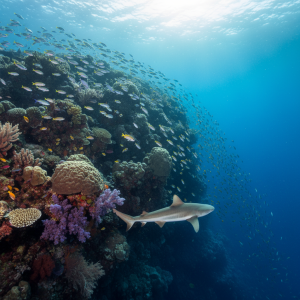
The gentle hiss of your regulator is the only sound that punctuates the deep, calming blue. A school of pyramid butterflyfish, a thousand yellow triangles, drifts past your mask in the 29°C water. Below, a green sea turtle glides effortlessly over a garden of pristine table corals. You are suspended in a world of profound tranquility, a silent observer in an ancient ecosystem. This is the pinnacle of Indonesian diving. But where, exactly, are you? For the discerning traveler seeking the ultimate underwater pilgrimage, the choice often narrows to two legendary archipelagos: the Togean Islands and Raja Ampat. As an editor who has spent months exploring both, I can tell you they represent two fundamentally different, yet equally compelling, philosophies of luxury travel. The question isn’t which is better, but which is crafted for you.
The Diver’s Dilemma: Untouched Serenity vs. Biodiversity’s Epicenter
The conversation about Indonesian diving invariably begins with Raja Ampat. It is, by all metrics, the global standard for marine biodiversity. Located within the Coral Triangle, this sprawling archipelago of over 1,500 islands boasts the highest recorded number of fish and coral species on Earth. According to Conservation International, it harbors nearly 75% of the world’s known coral species. A single dive site here can contain more species than the entire Caribbean. This is where you go for overwhelming spectacle: vast schools of fusiliers so dense they blot out the sun, majestic oceanic mantas at cleaning stations, and the thrill of high-current drift dives over vibrant reefs. It is dynamic, world-renowned, and unapologetically epic. It is the Formula 1 of scuba diving.
The Togean Islands, however, play a different game. Tucked away in the deep, protected Gulf of Tomini in Central Sulawesi, this cluster of 56 islands offers something increasingly rare: genuine solitude. The diving here is characterized by its serenity and intimacy. The protected nature of the gulf means currents are minimal, visibility is often exceptional, and the dive sites are almost always yours alone. While it may not have the sheer statistical species density of Raja Ampat, the health and uniqueness of its ecosystems are extraordinary. Here, you find three distinct reef types—fringing, barrier, and atoll—in one compact area, a geological rarity. It’s a destination for connoisseurs, for those who value the quality of the encounter over the quantity of the logbook entry. If Raja Ampat is a grand symphony, a voyage into togean indonesia is a private acoustic performance.
Marine Topography and The Underwater Experience
Let’s talk about what you’ll actually see and feel beneath the surface. My long-time dive guide in the region, a man named Anton, puts it best: “In Raja Ampat, the ocean shows you its power. In the Togeans, it shares its secrets.” In Raja Ampat, particularly in areas like the Dampier Strait, the dives are defined by nutrient-rich currents. Sites like Cape Kri and Blue Magic are legendary for a reason; you hook into the reef and watch a staggering procession of marine life—giant trevallies, barracuda, reef sharks, and Napoleon wrasse—hunt in the rushing water. The topography is dramatic, with deep pinnacles, submerged ridges, and sweeping slopes covered in a kaleidoscope of soft corals. It is exhilarating, demanding, and requires a degree of confidence as a diver. The sheer volume of biomass is something every serious diver should witness at least once.
The Togean experience is more nuanced and exploratory. Consider the famous Una-Una, a volcanic island with black sand that creates a stunning contrast for macro photographers. Or the B24 Bomber Wreck, a remarkably intact World War II aircraft resting at 22 meters, now a thriving artificial reef. The atolls of the Togeans, like Atoll Bomba, present sheer, deep walls that plummet into the abyss, decorated with enormous gorgonian sea fans and sponges. A typical Togean dive is a slow, multi-level exploration along one of these walls, spotting rare critters like pygmy seahorses and ghost pipefish, with zero other boats in sight. The calmness of the water allows for a more contemplative, photographic style of diving. It’s less about being swept away by the action and more about immersing yourself in the intricate details of a perfectly preserved ecosystem.
The Journey In: A Tale of Two Logistical Paths
The character of a destination is often defined by the journey required to reach it, and this is where the Togean Islands and Raja Ampat diverge most sharply. Raja Ampat, while still remote, has a relatively established tourist gateway. The common route is to fly into Sorong (SOQ) in West Papua, a journey of approximately 4 hours from Jakarta (CGK). From Sorong, it is a straightforward, albeit 2-hour, ferry ride or a private speedboat transfer to the main resort island of Waisai or directly to your liveaboard. Major airlines service this route daily, and the infrastructure is built to handle a steady flow of international divers. The entire process, from leaving Jakarta to arriving at your resort, can be accomplished in under 8 hours.
Reaching the heart of the Togean archipelago is a more deliberate pilgrimage, one that naturally filters out the crowds. The most common route involves flying from a major Indonesian hub to Gorontalo (GTO) or Luwuk (LUW) in Sulawesi. From Gorontalo, you face an overnight public ferry of around 12 hours or a private charter that can cut the time significantly. From Ampana, on the southern side of the gulf, it’s a 1.5 to 2-hour speedboat ride to the central islands. This multi-stage journey is an integral part of the experience. It telegraphs a departure from the connected world and an arrival into a place that time has largely left untouched. For our clients seeking true disconnection, this perceived “difficulty” is not a bug; it’s a feature. This commitment ensures that when you arrive, you are one of a very select few, a stark contrast to the hundreds of divers arriving in Sorong each week.
Onshore Luxury and The Art of The Surface Interval
Your time above the water is as critical to a luxury holiday as your time below it. In Raja Ampat, the dominant form of high-end accommodation is the luxury liveaboard. These floating boutique hotels, often beautiful Phinisi schooners, offer an way to explore the vastness of the archipelago, moving between the best dive sites from Misool in the south to Wayag in the north. A week-long charter can cost anywhere from $5,000 to over $10,000 per person. There are also a handful of superb land-based eco-resorts, like Misool Eco Resort or Papua Explorers, which blend seamlessly into their surroundings and operate as dedicated, high-end dive centers. The social life is centered around diving, with communal meals and dive briefings forming the rhythm of the day.
The Togean Islands offer a different model of luxury, one centered on private-island exclusivity. The experience here is less about a vessel and more about your own private overwater bungalow or beachfront villa. Resorts are small, intimate, and designed for privacy and relaxation. The focus is on a holistic escape. Imagine a morning two-tank dive, followed by an afternoon spent with a book on your private deck, a paddleboard excursion across a glassy bay, or a private chef preparing a meal of freshly caught fish. The luxury here is defined by space, silence, and personalized service. It’s about creating your own schedule, not adhering to a boat’s itinerary. This is the essence of the private Togean voyages we curate—it’s about owning your time in paradise, not just visiting it.
Crowd Factor and The Currency of Exclusivity
For many of our readers, the ultimate luxury is solitude. In this arena, the Togean Islands are in a class of their own. The entire archipelago has fewer than 20 small-scale resorts and homestays scattered across its 56 islands. On any given day, you can dive a world-class site and be the only boat there. In a week of diving, you might not encounter another group of divers underwater at all. This is an experience that has become almost impossible to find in other world-class diving locations. The Togean government and local communities have been deliberate in managing development, and the area is part of a national park, with a UNESCO Biosphere Reserve designation pending. This commitment to low-impact tourism preserves the very sense of discovery that makes the islands so special.
Raja Ampat, by contrast, is a global sensation. Its reputation, amplified by countless documentaries and magazine features, draws a significant number of visitors. While the area is vast, the most famous dive sites, especially in the central Dampier Strait region, can become congested. It is not uncommon to see five or six liveaboards moored at a popular spot like Manta Sandy, with dozens of divers in the water simultaneously. While operators are generally very professional, the sheer volume can detract from the feeling of wilderness. The local government has implemented a permit system (the “Raja Ampat Marine Park Entry Tag” costs roughly $70 USD) to fund conservation, as detailed on the official indonesia.travel portal. While these efforts are commendable, the reality is that Raja Ampat is a bustling, popular destination. The Togeans remain Indonesia’s treasured secret.
Quick FAQ: Togean Islands vs. Raja Ampat
Which destination is better for beginner divers?
The Togean Islands are generally more suitable for beginners. The near-absence of strong currents, excellent visibility, and numerous calm, protected dive sites provide a less intimidating environment to build skills and confidence. Raja Ampat’s signature drift dives can be challenging for those with fewer than 50 logged dives.
What are the peak diving seasons?
Raja Ampat’s prime season runs from October to April, during the dry season, when seas are calmest and visibility is at its peak. The Togean Islands benefit from the protection of the Gulf of Tomini, making them a year-round destination, though the best conditions are typically found between March and December.
Is one significantly more expensive than the other?
On average, a top-tier holiday in Raja Ampat, particularly on a luxury liveaboard, tends to be more expensive, often exceeding $7,000 per person for a 7-night trip. A comparable luxury private-resort stay in the Togeans can offer better value, though bespoke private charters can match these prices. The key difference is that Togean luxury is land-based and private, while Raja Ampat’s is often vessel-based and communal.
What about non-diving activities?
Both offer unique surface intervals. In Raja Ampat, iconic activities include the steep hike to the Piaynemo viewpoint for its classic karst-island vista and trekking to spot the rare Red Bird of Paradise. The Togeans offer more cultural and serene experiences, such as visiting the villages of the Bajau “sea gypsy” people, kayaking through mangrove forests, and swimming in a landlocked lake with millions of non-stinging jellyfish.
Ultimately, the choice between these two Indonesian jewels is a reflection of your travel philosophy. Raja Ampat is an essential pilgrimage for the diver who wants to witness the apex of marine biodiversity, a powerful and awe-inspiring spectacle. It is a destination to be seen and conquered. The Togean Islands are for the traveler who seeks to feel and inhabit a place, to disconnect from the world and reconnect with the quiet rhythms of the ocean. It is an experience of profound peace and rare solitude. For those who believe the greatest luxury is a paradise all to oneself, the path leads to the calm, turquoise waters of togean indonesia. Explore our curated voyages to discover an underwater world that remains truly wild and wonderfully yours.