Updated: May 2026
Togean Indonesia — Togean Islands Diving Spots — Una-Una Walls…
Togean Indonesia is a curated Indonesia luxury tourism experience offered by Togean Archipelago Voyages: handpicked routes, vetted operators, transparent pricing, and 24/7 concierge support across Indonesia.
- What makes Togean Indonesia a premium experience.
- How Togean Archipelago Voyages curates exclusive access and concierge logistics.
- Routes, seasons, and pricing transparency — no hidden fees.
Togean coral reef diving spots — the Coral Triangle epicentre, charted.
A site-by-site guide to the Togean Archipelago’s signature dives. Black-coral walls on an active volcano, Indonesia’s only true atoll outside Banda, soft-coral pinnacles, and mangrove-edge dives.
Where the Togeans sit on the global reef map
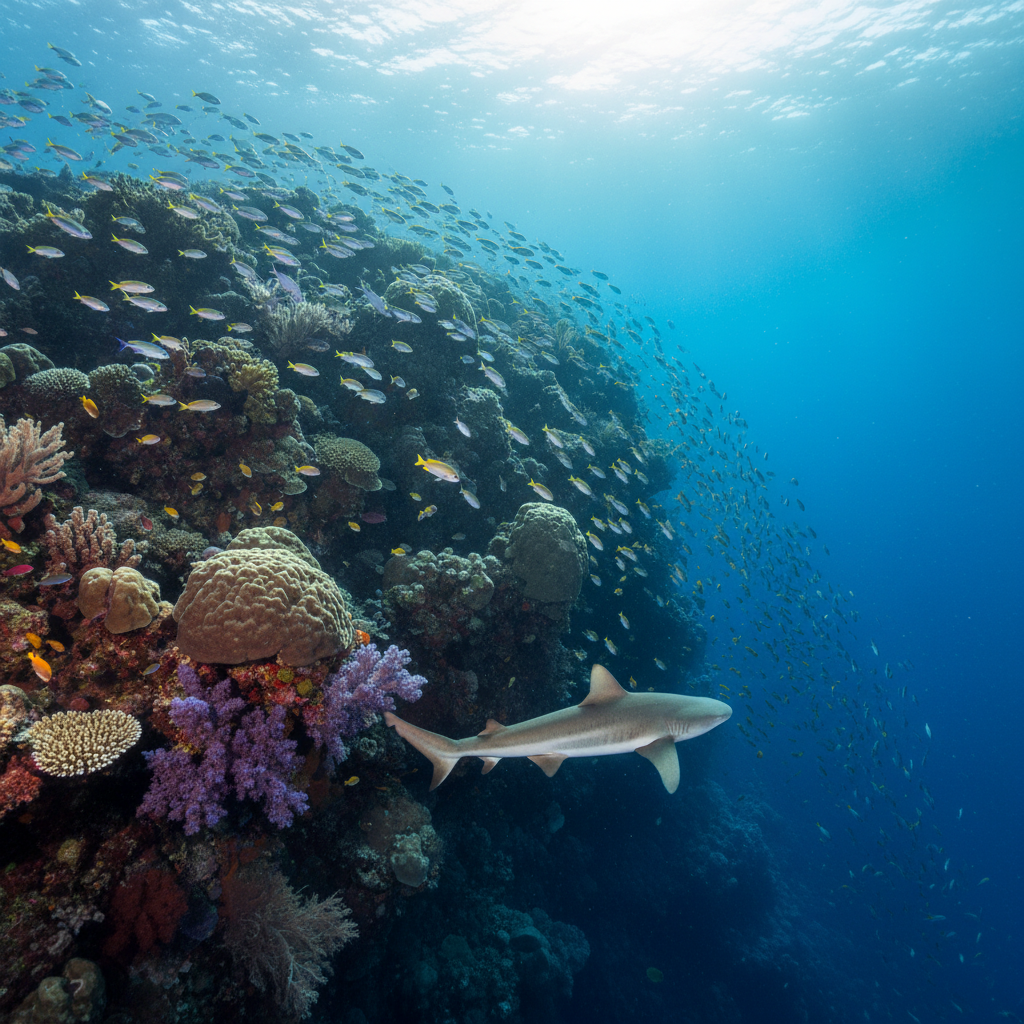
The Coral Triangle is the marine zone bordered by Indonesia, Malaysia, the Philippines, Papua New Guinea, the Solomon Islands, and Timor-Leste. It contains roughly 76 percent of the world’s known coral species and 37 percent of the world’s reef fish species. Inside the Coral Triangle, the geographic centre of biodiversity sits in eastern Indonesia and the western Philippines. The Togean Archipelago, in Tomini Bay on Central Sulawesi’s east coast, sits exactly inside that biodiversity centre. Tomini Bay itself is the calmest deepwater bay in the Coral Triangle — sheltered by the northern and eastern arms of Sulawesi, with average depth of 1,500 metres in the centre and reef-fringed rim. The combination of biodiversity, calm water, and low fishing pressure makes the Togean reefs unusually intact compared to most Coral Triangle sites within day-boat reach.
Una-Una active volcano walls
Una-Una is the most distinctive dive area in the archipelago — an active stratovolcano with reef-fringed flanks at the western edge of the Togean group. The volcano last erupted in 1983 (a major eruption that briefly buried surrounding reefs in ash) and the reefs have recovered fully. Apollo and Pinnacle are the two signature wall dives, both 18-30m vertical drops with strong vertical visibility, schooling barracuda, and white-tip reef sharks on the deeper ledges. The volcanic substrate produces a particular black-rock-with-soft-coral aesthetic that you do not find elsewhere in the archipelago. Black Coral Forest at 22-35m holds a grove of Antipathes black coral trees in pristine condition — black coral is slow-growing (1-2cm per year) and the Una-Una forest represents centuries of undisturbed growth. Advanced certification recommended for the deeper Una-Una dives. We dive Una-Una on Day 2 of our liveaboard.
Atoll Reef Taipi — Indonesia’s only Banda-style atoll
A true atoll is a ring-shaped reef enclosing a central lagoon, formed by reef growth around a sinking volcanic island over geological timescales. Indonesia has very few true atolls — most reef formations are fringing reefs or barrier reefs. The Banda Sea in the eastern archipelago has Manuk and Damar atolls; outside Banda, Atoll Reef at Taipi in the Togean Archipelago is the only documented true atoll. The reef ring is approximately 1.2 kilometres across, with a 30-metre central lagoon and outer wall dropping to 60 metres. Dive entry is on the lee side of the ring, drift-dive along the wall to the lagoon entrance, and exit through the channel into the lagoon for safety stop. Schooling jacks are reliable on the outer wall current; eagle rays appear on the deeper currents in April-May and September. We dive Atoll Reef Taipi on Day 4 dawn.
Tiga Sisters and Tanjung Keramat pinnacles
The most photographed dive site in the Togean Archipelago is Tiga Sisters — three coral pinnacles rising from 35-metre sand bottom to 6 metres below the surface, located in the channel between Pulau Papan and the next island east. Each pinnacle is densely covered in soft coral (Dendronephthya spp. in pink, orange, and white), with crinoids, anthias schools, and frogfish on the orange varieties. The current can be moderate to strong on the pinnacle tops; advanced buoyancy is essential. Tanjung Keramat is the smaller solo-pinnacle alternative — a single seamount with a single circumnavigation profile, easier conditions, with a resident hawksbill turtle and a leaf scorpionfish often visible at 18 metres. Both sites are visited on Day 4 and Day 5 of our liveaboard.
Catherine Reef and Malenge Wall
The eastern Togean reefs around Malenge Island deliver the highest fish-species count per dive. Catherine Reef is a sloping reef from shore to 25 metres, with a resident bumphead parrotfish school (15-20 individuals when conditions favour them), occasional Napoleon wrasse, and the highest density of butterflyfish species in the archipelago. Malenge Wall is the vertical face dropping from the eastern Malenge shore — gorgonian fans up to 2 metres across, black coral at depth, and the occasional manta ray on the deeper current in shoulder season. The Malenge mangrove channels behind the wall offer a unique surface dinghy ride past kingfisher rookeries and the rare crocodile sighting from boat distance. We dive Malenge on Day 6 of our liveaboard.
Marine life inventory
Common reliable sightings across the archipelago include green and hawksbill turtles, white-tip reef sharks, blacktip reef sharks (less frequent), schooling barracuda and jacks, bumphead parrotfish (Catherine Reef), Napoleon wrasse, octopus and cuttlefish (most reefs), seahorses (Tanjung Keramat sand patches), pygmy seahorses (Tiga Sisters gorgonian), mandarin fish (Mariona reef sand patches at sunset), blue-ringed octopus (rare and precious), frogfish (multiple species), leaf scorpionfish, ribbon eels, banded sea kraits. Manta rays are seasonal — best chance April-May and September on the deeper currents at Atoll Reef and Malenge. Whale sharks are recorded on the open Tomini Bay crossing but rarely on the reefs themselves. We log every dive and share the trip-wide species list at disembarkation.
Conditions and certification requirements
Tomini Bay is one of the calmest tropical seas — protected by both arms of Sulawesi, with average wave height under 0.5 metres in the dry season. Inter-island channels can build chop on monsoon afternoons (November-February); we run March-October only. Sea temperature 28-30C year-round; 3mm shorty wetsuit is comfortable for most divers. Visibility ranges 18-35 metres seasonally, with peak in April-May and August-September. Currents are mild on most reefs; moderate-to-strong at Una-Una pinnacles and Tiga Sisters tops. PADI Open Water minimum for daily reef dives; PADI Advanced Open Water recommended for Una-Una black coral wall, Tiga Sisters, and the deeper Atoll Reef wall. We brief each site individually before each dive and adjust depth profiles to certification. Read our Mariona stingless jellyfish lake guide for the parallel marine lake snorkel.
How to dive these sites — independent vs liveaboard
Day-boat diving from a fixed Kadidiri or Pulau Papan base reaches roughly 30 percent of the archipelago. Una-Una requires a 4-5 hour boat transfer one way, which most resorts do not run on a daily basis. Mariona Lake requires a 3-hour transfer and most resorts schedule it twice per week at most. Atoll Reef Taipi is reachable on a long day-trip but the early-current dawn entry is impractical from a fixed base. The Togean reefs were designed by geography for liveaboard access; that is why our 7-day liveaboard exists. Our 7-day Togean Archipelago liveaboard covers all six dive areas in one cruise, with marine biologist briefings and reef-respect protocols throughout.
Coral health and the bleaching question
The 2016 and 2020 global bleaching events affected reefs worldwide, including parts of the Coral Triangle. The Togean Archipelago experienced moderate bleaching at shallow sites in 2016 with substantial recovery by 2019. Una-Una and Atoll Reef Taipi were minimally affected — the deeper reef structures and current-flushed sites are more resilient. Tiga Sisters and Tanjung Keramat showed minor bleaching followed by full recovery. The Togean reefs benefit from low visitor density, traditional fishing practices that do not damage substrate, and the deep cool water of Tomini Bay buffering surface temperature. Independent monitoring by Indonesian marine biologists at Universitas Tadulako and the Coral Triangle Initiative places Togean reef health in the upper quartile of Coral Triangle sites for 2024-2025. Pristine is the right word for most of what you will dive on our liveaboard.
Dive every Togean signature site in one cruise
Una-Una black coral wall, Mariona reef, Atoll Reef Taipi, Tiga Sisters, Tanjung Keramat, Catherine Reef, Malenge Wall — all in seven days, eight divers maximum, marine biologist guided.